Loose-Fitting PAPRs, Fit Testing, and the Tradeoffs We’re Not Talking About

As respiratory protection regulations evolve, particularly across Europe, so too does the market response. One of the most noticeable trends has been the growing promotion of loose-fitting powered air-purifying respirators (PAPRs). These are often positioned as an attractive solution in the face of expanding fit testing requirements.
For workers who cannot achieve a seal with tight-fitting respirators, most notably individuals with facial hair, this attention is understandable. Loose-fitting PAPRs fill a key role in respiratory protection programs. And for certain tasks and exposure levels, they can be an appropriate option.
However, as demand grows, so does the marketing narrative. Increasingly, the lack of a fit testing requirement is being framed not simply as a feature, but as a primary advantage. That framing deserves a closer look.
PAPRs: No Fit Testing Is Not a Free Benefit
Loose-fitting PAPRs do not require fit testing because, by design, they do not seal against the face. The hood or helmet allows air to flow much more freely, relying on positive pressure to reduce the ingress of contaminants rather than preventing leakage altogether. This design characteristic has consequences.
From a protection standpoint, loose-fitting PAPRs have an assigned protection factor (APF) that is significantly lower than that of tight-fitting respirators. In many cases, the APF is half that of a full-face elastomeric respirator.
This tradeoff makes sense. If a respirator is not sealed to bare skin, there will inherently be more exchange between the wearer’s breathing zone and the surrounding environment. The absence of fit testing is not an added layer of assurance. It is an acknowledgment of a design limitation.
Why Fit Testing Isn’t Possible with PAPRs, and Why That Matters
Current fit testing methods depend on assessing leakage while the respirator is worn under negative pressure. Loose-fitting PAPRs cannot be meaningfully evaluated this way because the airflow and “allowable” leakage are integral to how the equipment functions.
As a result, no verification of fit or performance occurs at the individual wearer level. Protection assumptions rely entirely on manufacturer testing (typically conducted under controlled laboratory conditions) and on the PAPR’s ability to maintain positive pressure during use.
This raises an important point: while “no fit testing required” may sound appealing, it also means there is no confirmation that the respirator is providing the expected level of protection for a specific worker.
When this lack of individual verification is paired with marketing that emphasizes convenience, the risk of misunderstanding increases.
The Risk of Overselling Convenience
Loose-fitting PAPRs absolutely have a place in respiratory protection programs. They are particularly useful where exposure levels fall within their assigned protection range and where a tight seal cannot be reliably achieved. Concern arises when the absence of fit testing is positioned as a universal advantage rather than a conditional one.
When higher-hazard environments demand higher levels of protection, the limitations of loose-fitting designs become critical. Using equipment with a lower APF in situations that approach, or exceed, that limit increases risk, even if the respirator is functioning exactly as designed.
In this context, the lack of fit testing should serve as a signal. This equipment is intended for environments requiring less than the maximum protection available from sealed respirators, not as a workaround for avoiding fit testing altogether.
The Continued Role of Tight-Fitting Respirators
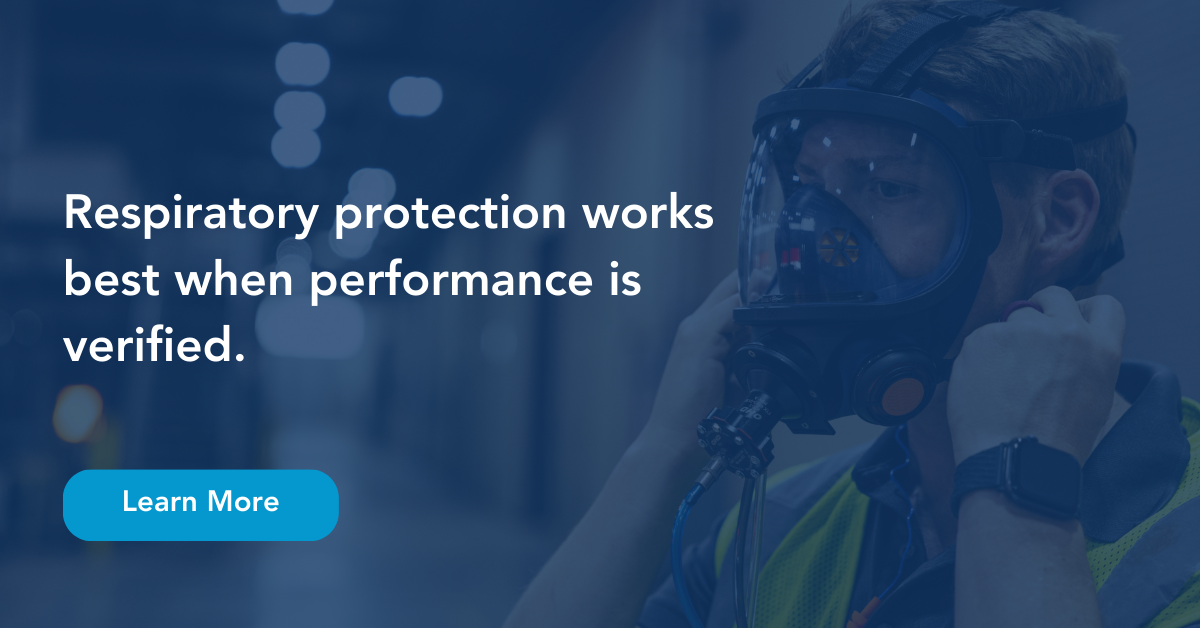
Reusable elastomeric respirators or tight fitting PAPRs that seal to the face, when paired with proper fit testing, training, and maintenance, remain a cornerstone of effective respiratory protection. Their higher protection factors, coupled with individual-level verification through fit testing, provide a level of assurance that loose-fitting designs cannot replicate.
This is not an argument against PAPRs. It is an argument for appropriate selection, grounded in exposure assessment and an honest understanding of protection limits.
As regulations change and markets respond, it is critical that decisions about respiratory protection remain driven by risk, performance, and worker health outcomes, rather than by convenience or marketing momentum.
A Balanced Conversation
Respiratory protection is never one-size-fits-all. Each option comes with benefits and limitations, and responsible programs recognize both. Loose-fitting PAPRs can be an effective solution in the right context. But the growing emphasis on “no fit testing required” risks obscuring a fundamental truth: less verification and less sealing mean less protection.
As we navigate new regulatory landscapes, that tradeoff deserves to be clearly understood, not quietly glossed over.