How to Write a Respiratory Protection Program

If employees in your workplace are routinely or even occasionally required to work in environments where respiratory hazards are present, OSHA requires your company to provide them with respirators. Respiratory hazards come in various forms, such as gases, vapors and particulates in the air. Similarly, individuals who work in oxygen-deficient atmospheres like tanks and sewers must be provided with respirators.
When you’re required to provide respirators, you are also required to create a written respiratory protection program. This comprehensive program must cover all information an employee may need about respirator use, including the specific hazards present in your workplace, the type of respirators in use and procedures for their use.
What does OSHA require?
OSHA 1910.134 sets the standard for respiratory protection programs. This standard includes the following requirements:
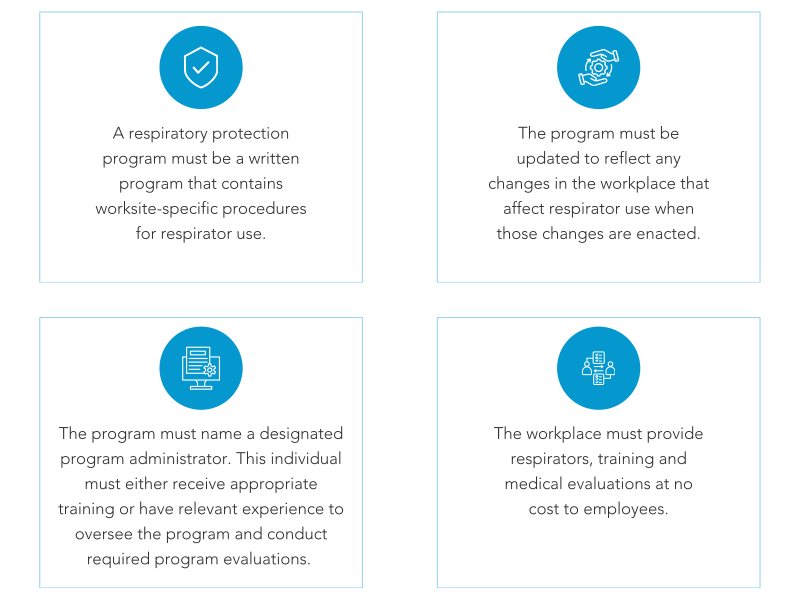
To clarify a few important points, you cannot simply reuse another company or worksite’s respiratory protection program—to be OSHA-compliant, you must write a program personalized to your specific workplace environment, including the hazards present and daily operations as they pertain to respirator use.
This also includes specifying which type of respirator is in use at your workplace and the conditions under which they must be used. In the program, include the procedures for the following:
- Selecting respirators
- Medical evaluations for employees who must wear respirators
- Respirator fit testing
- Proper use in routine and foreseeable emergency situations
- Cleaning, disinfecting, storing, inspecting, repairing, discarding, and otherwise maintaining respirators, as well as a written schedule for this maintenance
- Ensuring adequate air quality, quantity, and breathing air flow for atmosphere-supplying respirators
- Training employees regarding hazards to which they may be exposed in routine and emergency situations
- Training employees on proper respirator use, including maintenance, the respirators’ limitations, and how to properly put on and remove respirators
- Regularly evaluating the program’s effectiveness
The program administrator must be qualified to administer the program, either through relevant experience or through specialized training, such as the Respiratory Protection: Program Development and Administration course offered by FEMA. The program administrator is responsible for keeping all program-related records and ensuring that all program requirements are met.
Remember, this written program is a mandatory part of OSHA compliance. It’s also a necessary part of protecting your team’s health and safety.
Assessing your Workplace Hazards
Accurate, workplace-specific respirator requirements are the core component of your respiratory protection program. To determine which type of respirator, if any, is necessary in your workplace, conduct a comprehensive hazard assessment. Using your safety data sheets, determine exactly which chemicals are present at your site and how much is present in the air. This is a key step because in some cases, you may be able to mitigate a hazard and thus, not need respirators—and by extension, not need a respiratory protection program.
Determine if the hazard can be mitigated through one of the following:
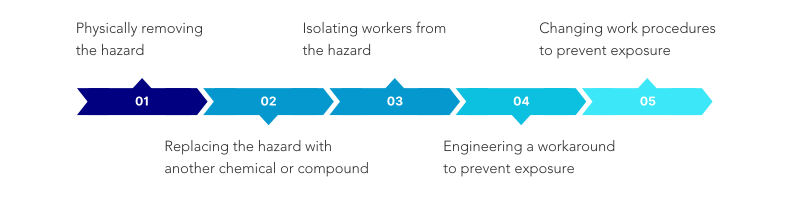
Respirators are a last line of defense against respiratory hazards. If you cannot prevent worker exposure through one of the steps listed above, you are required to provide respirators at no cost to employees.
The next step is determining which type of respirator is appropriate for your workplace.
Calculating Respiratory Hazards and Appropriate Respirators
Three things are key to determining the appropriate respirator models for your workplace:
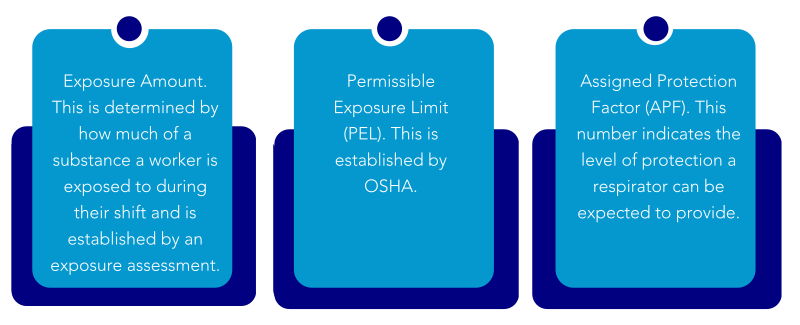
Once you know the exposure of your workers, you compare this to the PEL for the substance of concern. If you are over the PEL, then you will need to control the hazard to an acceptable level. This can be accomplished with a respirator (after you have used other feasible means of control). As an example, if a measured exposure to benzene is 6 parts per million (ppm) over an eight hour period and the referenced PEL is 1 ppm, then the exposure factor is 6 (that is 6 ppm exposure divided by 1 ppm PEL). The respirator used to protect against this exposure would need to have an APF of at least 6. This means you’d have to go with a respirator with an APF of 10. This is simply the lowest available according to OSHA.
If you are unsure of the level of protection your team needs, OSHA provides a helpful tool on their website. CLICK HERE to be redirected to it.
You can also speak with respirator manufacturers to determine which models are sufficient for your workplace.
Depending on the type of respirator you select, you may also need to select appropriate filters for the hazards present in your workplace.

Ensuring a Safe Workplace for your Team
A significant portion of your respiratory protection program is instructions for ensuring that respirators not only fit the employees who need them, but that the respirators remain in good working condition. You’ll need to note the type of fit testing used in your workplace, qualitative or quantitative, and the protocol for securing medical evaluations for employees to ensure respirator use is safe for them.
Additionally, your respiratory protection program must include procedures for training employees to use respirators safely. This includes protocol for scenarios where employees require language interpretation or other assistance. Include a section about federal or your state’s OSHA Respiratory Protection Standards to ensure employees understand these requirements.
Your respiratory protection program is a living document. This means you will revisit it regularly and may make changes as they become necessary.
Writing Your Respiratory Protection Program FAQs
How long should the written program be?
There is no specific length that a respirator protection program must be. Instead, a program must adequately cover all the information discussed above as it pertains to your workplace.
How often does the program need to be updated?
Your respiratory protection program must be updated every time there is a change to the workplace that affects respirator use. That includes the introduction of new inhalation hazards, changes to your daily workflow, and new manufacturing processes.
Can I use a template?
Yes. CLICK HERE for an example respiratory protection program you can use as a template when drafting yours.
OHD is Here to Help
Respirator fit testing is a crucial component of your respiratory protection program, ensuring that each respirator provides the expected level of protection to your employees. At OHD, we offer advanced fit testing devices like the QuantiFit2 and AeroFit, which provide accurate, reliable results to help you meet OSHA requirements and safeguard your team’s health.
Incorporating comprehensive fit testing into your respiratory protection program not only helps you comply with OSHA standards but also enhances your overall workplace safety strategy. By leveraging our expertise and industry-leading fit testing solutions, you can ensure that your employees are adequately protected in hazardous environments.
We encourage you to explore our QuantiFit2 and AeroFit devices and see how they can support your respiratory protection program. If you have any questions or need further assistance, our team of experts is here to help. Together, we can create a safer, healthier workplace for your employees.
—
Request a quote or schedule a demo to get started today.