How to Run an N95 Fit Testing Program at Your Hospital

If you’re an employee health nurse or infection control professional, there’s a good chance N95 fit testing is on your list of responsibilities. Maybe you inherited the program from someone who left. Maybe you built it from scratch. Either way, you’re the person who has to make sure hundreds of employees get fit tested every year, on top of everything else you do.
This isn’t a deep dive into regulations or a product pitch. It’s a practical walkthrough of what it takes to run an N95 fit testing program at a hospital, based on what we’ve learned from employee health teams across the country.
Know Your Requirements
Respirator fit testing is required by OSHA under 29 CFR 1910.134. Any employee who wears a tight-fitting respirator on the job needs to be fit tested before first use and at least annually after that. Retesting is also required when an employee switches to a different respirator make or model, or after physical changes that could affect the seal (weight change of 20 or more pounds, dental work, dermal fillers, facial scarring).
For hospitals specifically, there’s an additional layer: The Joint Commission. Joint Commission surveyors evaluate OSHA compliance as part of hospital accreditation surveys. Respiratory protection falls within this scope. That means your fit testing program and its documentation aren’t just an OSHA obligation. They’re part of your accreditation readiness.
The key point is that this isn’t optional, and the compliance stakes in a hospital setting are higher than many employee health teams realize.
Choose Your N95 Fit Testing Method
OSHA accepts two categories of N95 fit testing: qualitative and quantitative. Both produce valid results.
Qualitative fit testing uses a taste-based agent (Bitrex or saccharin) sprayed into a hood while the employee performs exercises. If they detect the agent, they fail. If not, they pass. Equipment costs are low. The tradeoff is that results are subjective, the process involves hoods and taste solutions that employees dislike, some people have difficulty with the sensitivity screening, and it is, most frustratingly, an extremely long test (12 minutes minimum per test subject).
Quantitative fit testing uses an instrument to measure the actual seal between the respirator and the face, producing a numeric fit factor. Results are objective, documented automatically, and not dependent on the employee’s taste sensitivity. The tradeoff is that the instrument is a capital purchase.
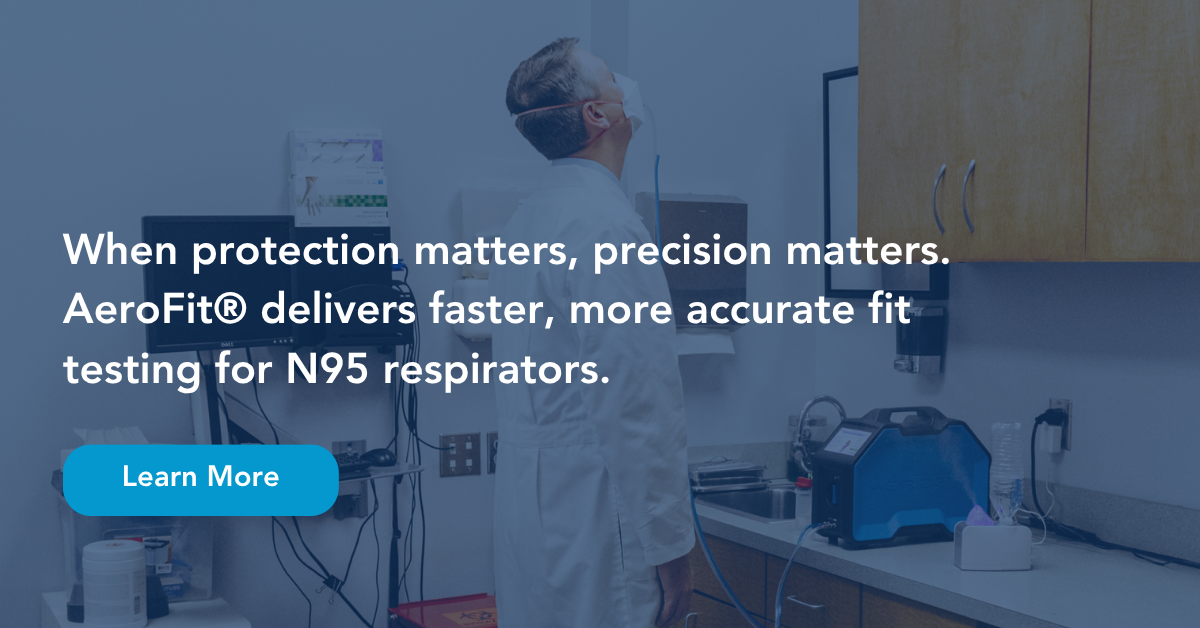
If you’re evaluating quantitative instruments, look for features that matter in a hospital setting: silent operation (you’ll be running this all day in a shared space), preloaded respirator lists (so you’re not manually configuring every time your facility switches brands), and step-by-step guided testing that doesn’t require extensive operator training. OHD’s AeroFit was designed around exactly these workflow considerations.
Most hospitals currently use qualitative methods because of cost. But the choice of method affects everything downstream: how long each test takes, how your employees experience the process, how you handle respirator brand changes, managing documentation storage, and how well that documentation holds up under scrutiny.
Build Your Scheduling System
This is the hardest part. Not the N95 fit testing itself. Getting people to show up.
Hospital employees work rotating shifts, get pulled into patient care, and have limited windows of availability. Fit testing competes with every other mandatory training and compliance requirement on their calendar. From what we hear from employee health teams, scheduling and attendance is consistently the number one challenge.
Here are three models that hospitals use:
Round-robin sign-ups. Open a window of time slots and let employees book. Works for mid-size facilities. Flexible, but some people will never sign up on their own.
Mass testing sessions. Dedicate specific days or weeks to running a high-volume operation. Larger hospital networks use this approach to get it done in a defined window rather than letting it drag on for months. Requires more upfront planning and staffing.
Staggered groups. Test departments on a rolling schedule throughout the year. New hires during onboarding, annual retests grouped by department or hire date. Keeps the workload steady but requires a reliable tracking system.
Whichever model you use, plan for no-shows from the start. Build makeup sessions into the schedule. Send multiple reminders: a week out, the day before, and the morning of. Automated reminder systems take this off your plate entirely. OHD’s Logic Cloud software, for example, handles scheduling notifications, so you’re not manually chasing people down. Get department managers to communicate that fit testing is a requirement, not a suggestion. A short email from their department head goes further than three from employee health.
Set Up Your N95 Fit Testing Station
Keep it consistent:
- A quiet room away from high-traffic areas. Training rooms, health clinic spaces, and offices work well. If you’re using a quantitative CNC instrument, look for one with silent operation. Instruments like AeroFit run quietly enough to use in shared clinical spaces without disrupting the area around you (or driving you crazy after hours of fit testing).
- Testing equipment set up and verified before the first employee arrives. Some instruments include automated daily verification to streamline this step.
- Respirators in the makes, models, and sizes your facility uses.
- Documentation forms or software ready to go.
- A posted or verbal explanation of the process, so employees know what to expect.
Before anyone sits down, confirm:
No facial hair where the respirator seals to the face (OSHA requirement, not negotiable), no eating, smoking, or drinking for 30 minutes prior (for qualitative or CNC quantitative testing), and the employee has the respirator they’ll actually use on the job. Communicate these requirements well before testing day.
Handle Failures Constructively
A failed fit test is a useful signal, not a bad outcome. It means the test did its job.
The standard progression when someone fails:
- Retest with the same respirator. Coach on donning technique and adjust positioning.
- Try a different size of the same model.
- Try a different make and model entirely.
Most employees pass with some adjustments. Track failure patterns across your workforce for specific makes and models. If you’re seeing repeated failures on the same respirator, that’s worth evaluating.
Stay Audit-Ready
The most common documentation problem isn’t incomplete records. It’s no records at all. Paper-based systems lead to gaps. Tests that happened but were never documented. Clipboards that got lost. Departments with no fit testing history on file.
Whatever system you use, here are a few basics:
- One system of record. All results in one place, searchable and accessible. Compliance tracking software like OHD’s Logic Cloud centralizes fit test records from every instrument and makes them reportable on demand.
- Record at time of testing. Don’t batch-enter later. That’s where gaps happen. Quantitative instruments like AeroFit capture results digitally at the point of testing, so there’s nothing to transcribe.
- Track who still needs testing. You should know at any point in the year who’s been tested, who hasn’t, and who’s overdue.
- Be ready for the question. If an OSHA inspector or Joint Commission surveyor asks on a Tuesday morning, you should be able to pull records that same day.
Ready to Start Fit Testing?
Now that we’ve covered your bases, you’re ready to jump in and get to testing. Request a demo of AeroFit today.